
Mining Dewatering Pump Sizing Guide: Which CannaSpring Pump Fits Your Mine Site
Most mine site buyers know their water conditions well before they have exact flow and head numbers in hand. These three questions map straight to a CannaSpring product line based on what you already know about the site.
On This Page
Start With These Three Questions
Answer these based on what you already know about the site:
- Roughly how much water needs to move, and how far? A rough flow rate (m³/h) and a sense of how far up the pit wall or across the site the water needs to travel is enough to start.
- How much lift (head) is involved? A shallow sump near the surface is a very different job from water sitting at the bottom of a deep open pit.
- What’s actually in the water? Sandy or muddy mine water, water with rock fragments and haul road debris, or relatively clean sump water all point toward different equipment.
High Head or Long-Distance Transfer → ZBCY-Series
Deep open-pit sump, or water needs to travel a long way to reach the discharge point
If your dewatering point sits well below the pit rim, or water has to travel a significant vertical distance and horizontal run to reach a discharge or treatment point, you need head capability first — flow rate matters, but it’s a secondary concern if the pump can’t physically lift water out of the pit in the first place.
Recommended: our ZBCY-series trailer mounted water pump line, rated up to 120 meters of head and 80–3000 m³/h flow, built specifically for the high-lift, long-distance transfer duty common on open-pit mine sites.
High Solids or Debris-Heavy Water → SCPY-Series
Tailings-adjacent sump, or haul road and pit water carrying sand, silt, or rock fragments
If the water at your site is visibly muddy, sandy, or carrying rock fragments and general debris, solids-handling capability matters more than head — a pump that can’t pass what’s actually in the water will clog regardless of how well it’s rated on paper.
Recommended: our SCPY-series Self-Priming Trash Pump – Trailer Mounted Pump, built to pass solids up to 76mm — sized for tailings area drainage, haul road runoff, and general mine site debris without clogging.
Need Both High Head and Heavy Solids?
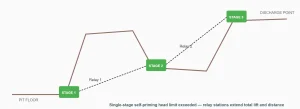
Many mine sites need both — a deep pit or long transfer distance combined with sediment-heavy water. This isn’t unusual, and it doesn’t necessarily mean choosing between the two priorities. Our ZBCY-series already passes solids up to 75mm alongside its high-head capability, which covers a large share of combined-condition sites on its own. For sites with both very high head requirements and very coarse solids beyond that threshold, a staged configuration — pairing an SCPY-series unit at the sediment-heavy intake stage with ZBCY-series units for the high-head transfer leg — is the standard approach rather than expecting a single unit to do both jobs at their respective extremes. This is a site-specific configuration question best worked through directly with our engineering team rather than guessed at from a general guide.
Not Sure of Your Exact Numbers Yet?
If you don’t have precise flow and head figures yet, these typical ranges by mine site type are a reasonable starting point for narrowing down which series to look at first — treat them as a starting reference, not a substitute for your own site data once available:
| Site Type | Typical Head | Typical Water Condition | Starting Point |
|---|---|---|---|
| Open-pit sump, active deep pit | High (often 100m+) | Moderate sediment | ZBCY-series |
| Tailings management area | Low-to-moderate | Heavy sediment / abrasive solids | SCPY-series |
| Haul road / general site drainage | Low | Coarse debris, rock fragments | SCPY-series |
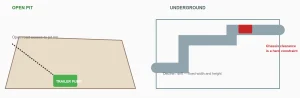
| Underground mine drainage | Variable, often staged | Site-dependent | Discuss directly with our team |
Quick Decision Table
| If Your Site Needs… | Choose |
|---|---|
| High head / deep pit / long transfer distance | ZBCY-Series |
| Heavy sediment, tailings, or debris-laden water | SCPY-Series (Self-Priming Trash Pump) |
| Both high head and heavy solids | ZBCY-Series alone (up to 75mm solids), or staged ZBCY + SCPY configuration |
| Not sure yet | Contact our engineering team with your site type |
Frequently Asked Questions
Q: What if I don’t know my exact head requirement yet?
A: A rough estimate of pit depth or vertical lift distance is enough to start — our team can help refine the exact figure once you have more site-specific data, and starting the conversation now doesn’t require a finished engineering report.
Q: Can one pump handle both long-distance transfer and heavy sediment?
A: Our ZBCY-series covers a meaningful range of combined conditions on its own, since it passes solids up to 75mm alongside its high-head capability. For sites with both very high head and very coarse solids beyond that, a staged configuration is generally the better approach rather than expecting a single unit to cover both extremes.
Q: What’s the practical difference between ZBCY and SCPY in plain terms?
A: ZBCY is the high-head, long-distance specialist — the choice when your main problem is getting water out of a deep pit or moving it a long way. SCPY is the solids-handling specialist — the choice when your main problem is what’s suspended in the water rather than how far it has to travel.
Q: Does underground mine drainage need different equipment than open-pit dewatering?
A: Often yes, since underground sites can involve different space, access, and staging constraints — this is a case worth discussing directly with our engineering team rather than reading off a general table, since underground configurations tend to be more site-specific.
Not sure which series fits your site? Explore our mining dewatering pump solutions or contact the CANNASPRING engineering team with your rough flow, head, and water condition — we’ll help you land on the right configuration.