
Mixed Flow Pump vs Centrifugal Pump: Which Is Better?
When selecting a pump for dewatering, flood control, irrigation, or industrial water transfer, engineers often compare mixed flow pumps and centrifugal pumps. While both are widely used for moving water, they are designed for different operating conditions. Understanding the differences in flow rate, head, efficiency, and application scenarios can help determine which pump is the better choice for a specific project.
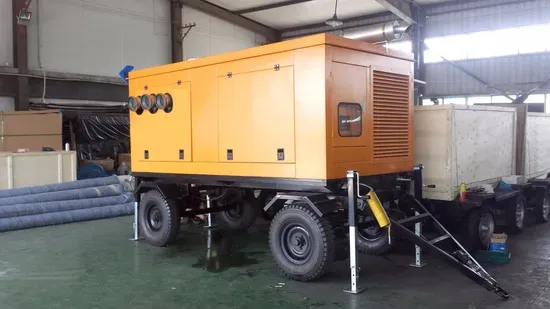
These pumping technologies are also widely integrated into mobile trailer-mounted dewatering pump systems for emergency and remote site operations.
What Is a Centrifugal Pump?
- Radial flow design
- Higher pressure capability
- Suitable for medium and high head applications
- Common in industrial water supply and general pumping systems
What Is a Mixed Flow Pump?
- Combination of radial and axial flow characteristics
- Delivers larger flow rates
- Operates efficiently at lower to medium head
- Frequently used in flood control and large-volume water transfer
Mixed flow pumps are especially common in mobile trailer-mounted flood control and emergency drainage systems due to their high flow capacity.
Mixed Flow Pump vs Centrifugal Pump: Key Differences
| Feature | Mixed Flow Pump | Centrifugal Pump |
| Flow Rate | Very High | Medium to High |
| Head | Low to Medium | Medium to High |
| Efficiency | Excellent for large-volume transfer | Excellent for higher-pressure applications |
| Power Consumption | Efficient at high flow conditions | Efficient at moderate flow and higher head |
| Solids Handling | Suitable for relatively clean water or light debris | Available in various designs, including trash pumps |
| Installation Size | Often larger for high-capacity systems | Generally more compact |
| Typical Applications | Flood control, irrigation, drainage, water transfer | Industrial water supply, boosting, dewatering, process systems |
Flow Rate and Head Performance Comparison
Flow rate and head are usually the most important factors when comparing these two pump types.
If a project requires moving large volumes of water with relatively low discharge head, a mixed flow pump is generally the more efficient solution. Mixed flow pumps are commonly used in flood control systems, drainage stations, irrigation projects, and emergency dewatering operations where maximum water movement is the priority.
Centrifugal pumps are often preferred when higher discharge pressure or greater lifting height is required. They perform well in industrial water supply systems, long-distance water transfer, and applications where maintaining pressure is critical.
Application-Based Pump Selection Guide
1.Construction Site Dewatering
Centrifugal pumps are commonly used for construction dewatering because they provide reliable performance and sufficient head for temporary drainage systems.
2.Municipal Drainage and Flood Control
Mixed flow pumps are often preferred for municipal drainage and flood control projects due to their ability to handle very large water volumes efficiently.
3.Mining Drainage
The choice depends on site conditions. Centrifugal pumps are typically selected when higher discharge pressure is needed, while mixed flow pumps may be used for large-volume drainage.
4.Emergency Pumping Systems
For emergency flood response and rapid water removal, mixed flow pumps are frequently selected because they can move large quantities of water in a short period of time.
5.Why Mixed Flow Pumps Are Common in Flood Control Systems
Flood control projects typically require high flow rates, low to moderate head, continuous operation, and energy-efficient performance.
For these conditions, mixed flow pumps often provide significant advantages over conventional centrifugal pumps. Their hydraulic design allows them to deliver large discharge capacities while maintaining stable operating efficiency.
As a result, mixed flow pumps are widely used in trailer-mounted flood control systems, municipal drainage stations, river management projects, and emergency water transfer applications.
How to Choose Between a Mixed Flow Pump and a Centrifugal Pump
Choose a mixed flow pump if your project requires:
- High flow rate and low head
- Flood control operations
- Municipal drainage
- Agricultural irrigation
- Emergency water removal
Choose a centrifugal pump if your project requires:
- Higher discharge pressure
- Medium to high head
- Long-distance water transfer
- Industrial water supply systems
- General-purpose pumping applications
Conclusion
Neither pump type is universally better. The right choice depends on the specific operating requirements of the project.
Mixed flow pumps excel in high-flow, low-head applications such as flood control, drainage, irrigation, and emergency water removal, and are widely used in mobile trailer-mounted pumping systems.
Centrifugal pumps are generally better suited for applications requiring higher pressure and are also commonly deployed in mobile dewatering units for construction and industrial use.