5 Factors to Consider Before Purchasing a Dewatering Pump
1.Understand Your Water Removal Requirements
One of the most common mistakes when purchasing a dewatering pump is focusing only on the advertised flow rate. While flow capacity is an important specification, it does not automatically determine whether a pump is suitable for a particular application.
Before selecting a pump, buyers should estimate how much water needs to be removed and within what timeframe. A construction site requiring rapid drainage after heavy rainfall may have very different requirements from a mining operation that demands continuous dewatering over an extended period.
For projects focused on irrigation and water transfer, a mixed-flow pump can be a practical option when the application requires continuous movement of relatively clean water.
It is also important to remember that actual pump performance is often lower than laboratory-rated capacity. Factors such as suction lift, discharge distance, pipe diameter, and friction losses can significantly reduce the effective flow rate delivered on site. Understanding the project’s water removal requirements is therefore the first step toward selecting the right equipment.
2.Calculate the Required Pumping Head
Many pump selection failures occur because total pumping head is underestimated. Buyers often focus on vertical lift while overlooking other sources of system resistance.
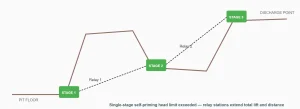
In practice, total dynamic head (TDH) includes not only elevation changes but also friction losses caused by long pipelines, bends, valves, and fittings. As the required head increases, pump performance generally decreases.
For example, a pump discharging water through a long pipeline may require significantly more head than a similar application with a shorter discharge distance. If the selected pump cannot overcome the required head, actual flow rates may fall well below expectations.
Evaluating pumping head requirements during the planning stage helps prevent underperforming systems and costly operational adjustments later.
3.Analyze Water Quality and Solids Handling Needs
The characteristics of the pumped liquid have a direct impact on pump efficiency, maintenance requirements, and service life.
Not all dewatering applications involve clean water. Construction sites, mining operations, flood control projects, and emergency drainage scenarios often contain sand, silt, gravel, leaves, or other debris. These materials can increase wear on internal components and raise the risk of clogging.
Selecting a pump based solely on flow capacity while ignoring solids content can lead to premature equipment failure and increased maintenance costs. Buyers should evaluate the size and concentration of suspended solids before making a decision.
For applications involving dirty water or debris-laden liquids, pumps designed for solids handling are generally more reliable than standard clean-water pumps.
4.Select the Appropriate Power Source
The choice between diesel and electric power should be based on project conditions rather than personal preference.
Electric pumps are often suitable for locations with stable power availability and lower operating noise requirements. However, many dewatering projects take place in remote areas, temporary construction sites, mining operations, or emergency flood response situations where grid power may not be available.
In such cases, diesel-powered pumps provide greater flexibility and independence. They can be deployed quickly and operate continuously without relying on external electrical infrastructure.
When evaluating power options, buyers should consider fuel availability, operating duration, environmental conditions, and long-term operating costs to determine the most practical solution.
5.Consider Mobility and Installation Conditions
Pump performance is important, but transportation and deployment efficiency can be equally critical.
Many projects require equipment to be moved between multiple locations or installed in areas with limited infrastructure. In emergency situations, rapid deployment may have a greater impact on project success than maximum pumping capacity.
Buyers should assess site accessibility, transportation requirements, available installation space, and expected relocation frequency before selecting equipment.
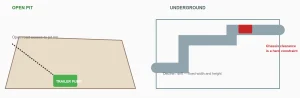
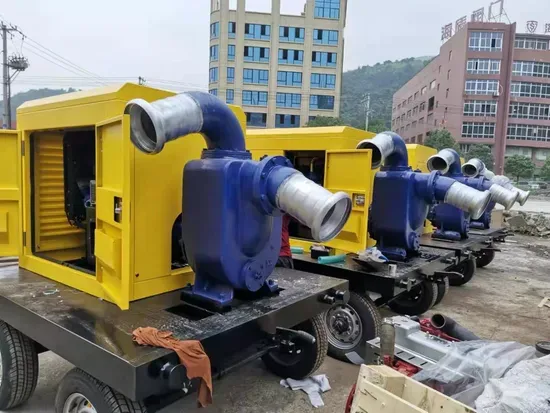
For temporary drainage, flood control, and remote-area operations, trailer-mounted dewatering pumps are often preferred because they can be transported easily, installed quickly, and relocated as project conditions change.
Final Thoughts
Purchasing a dewatering pump is a long-term investment that affects project efficiency, operating costs, and overall reliability. Rather than focusing on a single specification, buyers should evaluate flow requirements, pumping head, water conditions, power availability, and site accessibility as part of the selection process.
By carefully assessing these five factors before purchasing, project owners and contractors can choose a dewatering pump that delivers dependable performance while minimizing downtime and operating expenses.