

Trailer-Mounted Pump Price Guide: What Affects the Cost
A trailer pump has no single list price. The final quotation follows the pump type, the duty it must perform, the engine, the trailer and the accessories you choose.
This guide explains what drives the price of ZBCY, SCPY and CHWY units, how to compare total ownership cost, and what to send us so your quotation is accurate the first time.
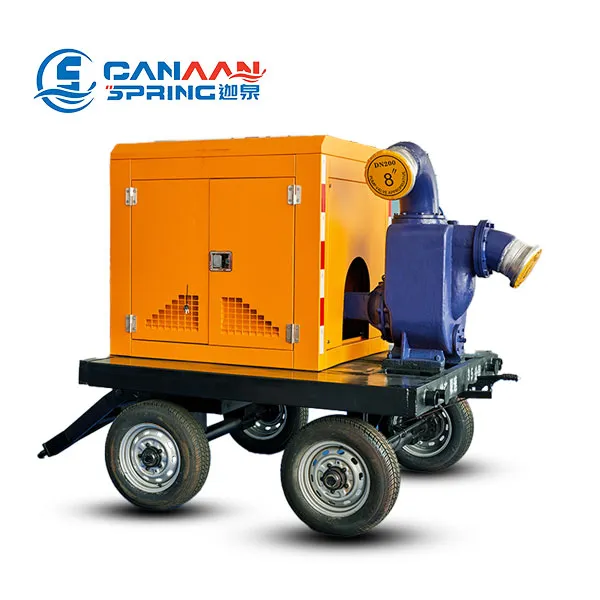
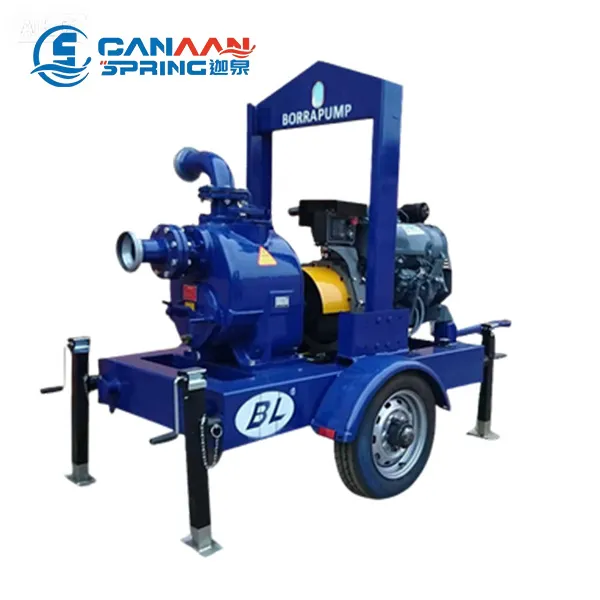
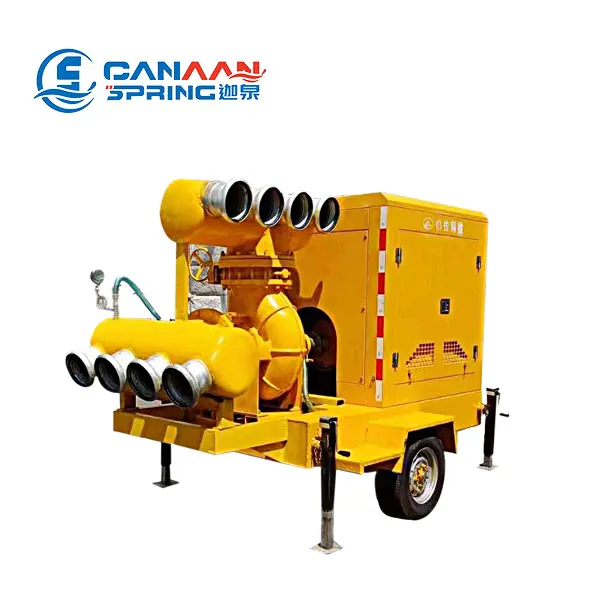
Why Trailer Pump Prices Vary
Trailer pumps are built for different operating conditions, so two units with the same flow rating can be quoted very differently. These are the main items that change the final figure.
Pump type and hydraulic design
Head, flow, solids handling and pump materials determine which series and size the duty needs.
Engine brand and power
Diesel engine brand and rated power follow the pumping duty and the technical preferences you specify.
Trailer chassis
Chassis size and wheel configuration depend on the unit’s size and on site mobility needs.
Priming system
Standard self-priming and optional vacuum-assisted systems should be compared separately between models.
Accessories and controls
Rain covers, control equipment and other options change the scope of the quotation.
Shipping and destination
Delivery cost depends on equipment dimensions, shipping method, destination and agreed terms.
Trailer Pump Price vs. Total Cost of Ownership
When evaluating a trailer-mounted pump, the initial purchase price should be considered alongside its long-term operating costs.
For contractors, mining operators and pump rental companies, fuel consumption, routine maintenance, spare parts availability and equipment downtime can significantly affect the overall cost of ownership.
A properly selected pump can help avoid unnecessary engine oversizing, excessive fuel consumption and premature equipment wear. Choosing a high-head pump for a low-head, high-volume application may result in an unsuitable system configuration. Selecting a clean-water pump for debris-laden wastewater can lead to operational problems.
The most cost-effective trailer pump is therefore not necessarily the cheapest unit. It is the equipment that matches the actual pumping duty and provides suitable performance throughout its intended operating life.
Total Cost of Ownership (TCO)
How Pump Configuration Affects the Final Price
The following examples show how different pumping applications influence equipment configuration and pricing.
ZBCY – High-Head Dewatering
The hydraulic configuration is determined by the required flow, discharge head and solids-handling requirements. Pump size, hydraulic design and engine power are key factors affecting the final equipment cost.
View ZBCY specifications
SCPY – Self-Priming Trash Pumping
The self-priming trash pump design accommodates solids-bearing liquids. The required solids-handling capability, priming arrangement and engine configuration influence the final quotation.
View SCPY specifications
CHWY – High-Volume Water Transfer
The mixed-flow design supports high-volume water transfer at low to medium head. Required flow capacity, pump diameter and engine configuration determine the equipment specifications and final cost.
View CHWY specifications| Your pumping need | Series to consider | Configuration Factors Affecting the Quotation |
|---|---|---|
| High-head dewatering | ZBCY | The required discharge head determines the hydraulic design and engine power needed for the operating point. |
| Mining water drainage | ZBCY | High-head requirements and solids-handling capability, including particle sizes up to 75 mm on specified configurations, influence the pump and drive configuration. |
| Construction wastewater | SCPY | Solids-handling requirements, including particles up to 76 mm, and the self-priming arrangement influence the pump and priming-system configuration. |
| Floodwater with debris | ZBCY / SCPY | Required flow, discharge head, debris size and suction conditions determine the appropriate pump and system configuration. |
| Large-scale irrigation | CHWY | The required flow capacity, including configurations up to 5,200 m³/h, determines pump size and engine configuration. |
| Large-volume clean water transfer | CHWY | The required high flow and low-to-medium head determine the mixed-flow pump size and drive configuration. |
| Temporary municipal water transfer | CHWY | Required flow, operating head and trailer chassis requirements determine the complete mobile equipment configuration. |
Why the Actual Operating Point Matters for Pricing
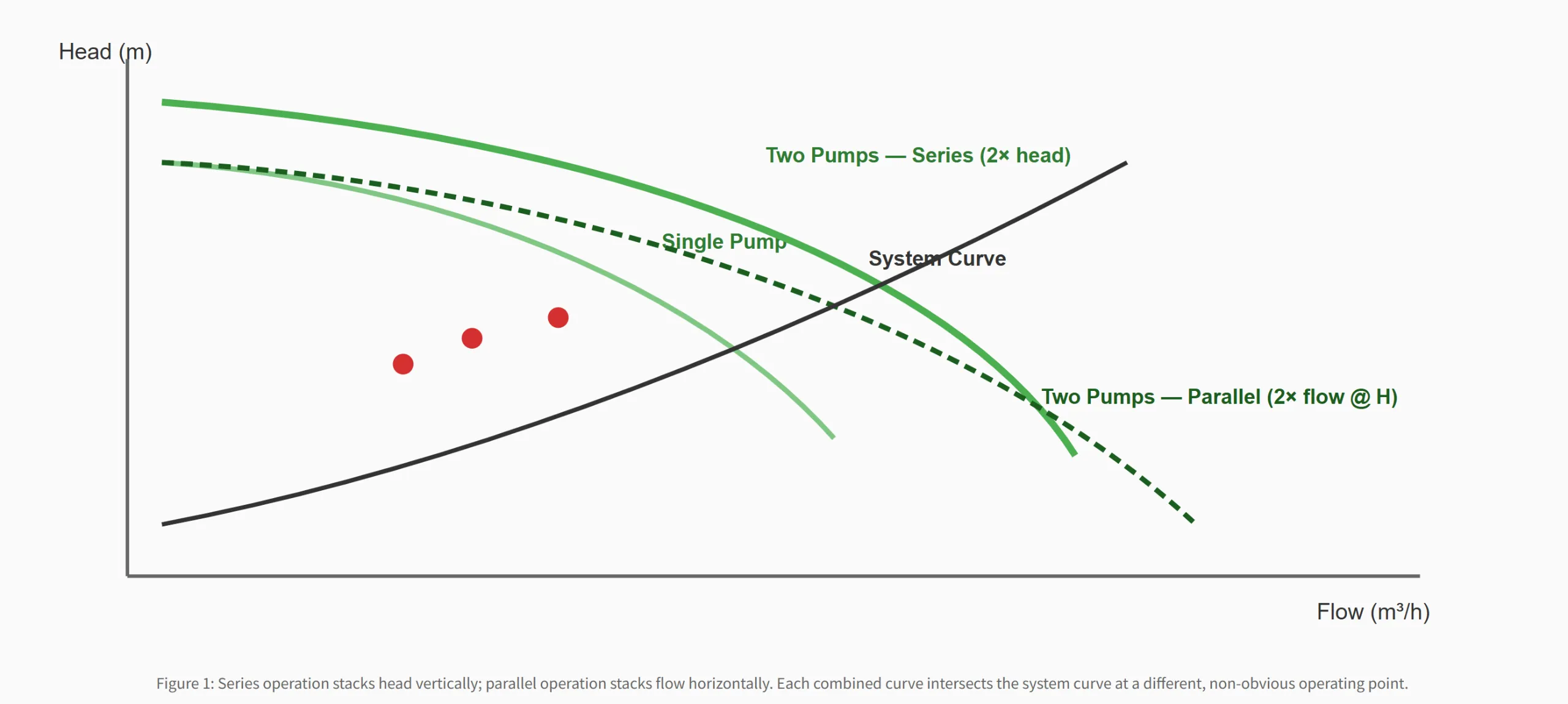
The final quotation must be based on the required operating point, not simply the maximum flow or maximum head listed in the product specifications. Actual performance depends on the system's total dynamic head, suction conditions and pipeline losses.
Real selection combines the factors listed here. For how curves are read, see our guide:Trailer Mounted Pump Performance Curves: A Technical Guide.
- Required flow rate
- Total dynamic head (TDH)
- Static suction lift & NPSH
- Pipeline length and diameter
- Pipe friction losses
- Liquid density and viscosity
- Solids concentration and particle size
- Operating hours and duty
How to Get an Accurate Trailer Pump Quote
To give an accurate trailer pump price, CANNASPRING needs several key details about your application. The more you share, the easier it is to recommend a suitable model and prepare a quotation that reflects your real requirements.
Define Your Pumping Requirements
Application, flow, head and liquid.
Select the Pump Configuration
ZBCY, SCPY or CHWY, plus engine and trailer requirements.
Confirm Optional Equipment
Vacuum assist, rain cover, special controls or other items.
Submit Your Request
Send the requirements and destination for technical and sales review.
Information to include in your inquiry
- ApplicationConstruction dewatering, mining, irrigation, flood control or wastewater transfer.
- Required flow rateTarget capacity in m³/h or GPM.
- Total dynamic headTotal head the pump must overcome, including static elevation difference and friction losses in the suction and discharge piping.
- Liquid characteristicsClean water, muddy water, wastewater or water containing solids.
- Solids handlingMaximum particle size and approximate solids concentration.
- Suction conditionsSuction lift and water source arrangement.
- Engine requirementsPreferred diesel engine brand, power supply or other preferences.
- Quantity and destinationRequired quantity and delivery country or port.
Example: Construction Site Dewatering
| Application | Excavation dewatering |
| Required flow | 500 m³/h |
| Total dynamic head | 35 m |
| Liquid | Water with suspended debris |
| Solids | Max particle size < 25 mm, approx. 5% solids concentration |
| Power | Diesel engine |
| Quantity | 2 units |
| Destination | Jebel Ali Port, UAE (CIF) |
This example shows the information a quotation needs. It is not a confirmed ZBCY or SCPY selection: a flow and head alone still have to be checked against the pump curve, suction conditions and liquid.
Why Choose CANNASPRING for Trailer-Mounted Pumps?
CANNASPRING integrates in-house hydraulic engineering with custom engine and chassis assembly—delivering factory-matched performance, optimized fuel economy, and transparent cost breakdowns for every build.
From rapid 24-hour quotation responses to fully factory-tested pump packages, we support regional dealers, engineering contractors, and equipment operators worldwide with field-ready dewatering solutions.

Multiple Pump Configurations
ZBCY, SCPY and CHWY series for different hydraulic duties.
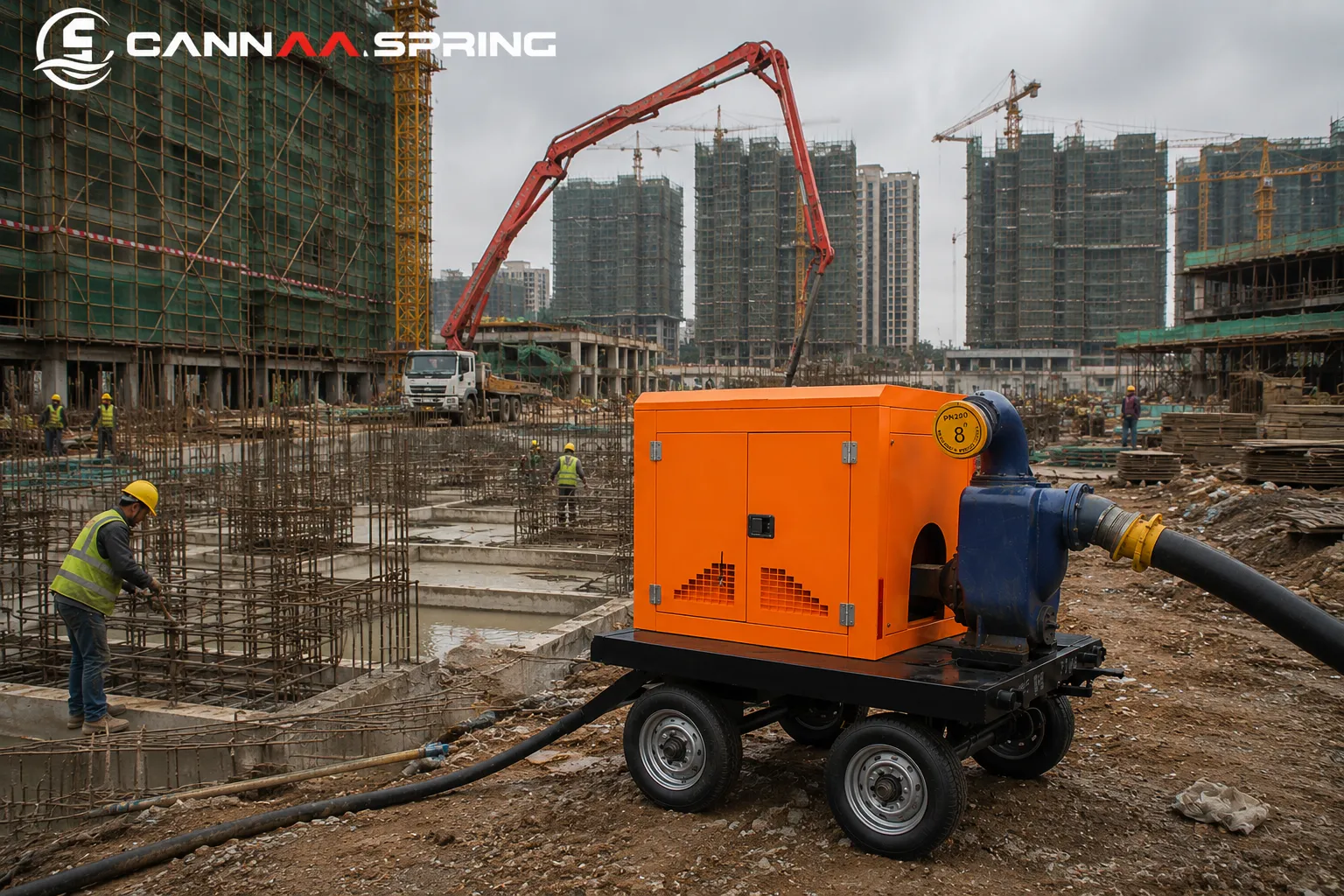
Application-Based Selection
Flow, head and liquid matched to the real pumping duty.
Integrated Pumping Systems
Pump, engine and trailer arranged as one mobile system.
Technical Documentation
Datasheets, performance curves and test information.
Trailer Pump Price: Frequently Asked Questions
What Affects the Trailer Pump Price?
The trailer pump price depends on the hydraulic performance, diesel engine brand and rated power, trailer chassis and auxiliary equipment. Larger capacities and more demanding operating conditions may require different equipment configurations.
Why do trailer pump prices vary so much?
Trailer pumps are built for different operating conditions. Engine power, hydraulic design, pump materials, chassis size, priming systems and optional accessories can all affect the final quotation.
What is included in a complete trailer pump price?
Depending on the quotation scope, a complete unit may include the pump assembly, engine, trailer chassis, control equipment and selected accessories.
Is a self-priming trailer pump more expensive?
The cost depends on the pump design and priming configuration. Standard self-priming capability and optional vacuum-assisted systems should be compared separately when evaluating different models.
How can I get a quotation for a trailer-mounted pump?
Provide your required flow, total dynamic head, liquid characteristics, solids size, suction conditions, quantity and destination. CANNASPRING can use these details to evaluate the appropriate pump configuration and prepare a quotation.
Does the trailer pump price include shipping?
Shipping should be confirmed separately in the quotation. The final delivery cost depends on the equipment dimensions, shipping method, destination and agreed delivery terms.
Does the Required Flow Rate and Head Affect the Price of a Trailer Pump?
Yes. Required flow rate and total dynamic head influence the hydraulic design, pump size and engine power needed for the application. Pipeline losses, suction conditions and liquid characteristics must also be considered.